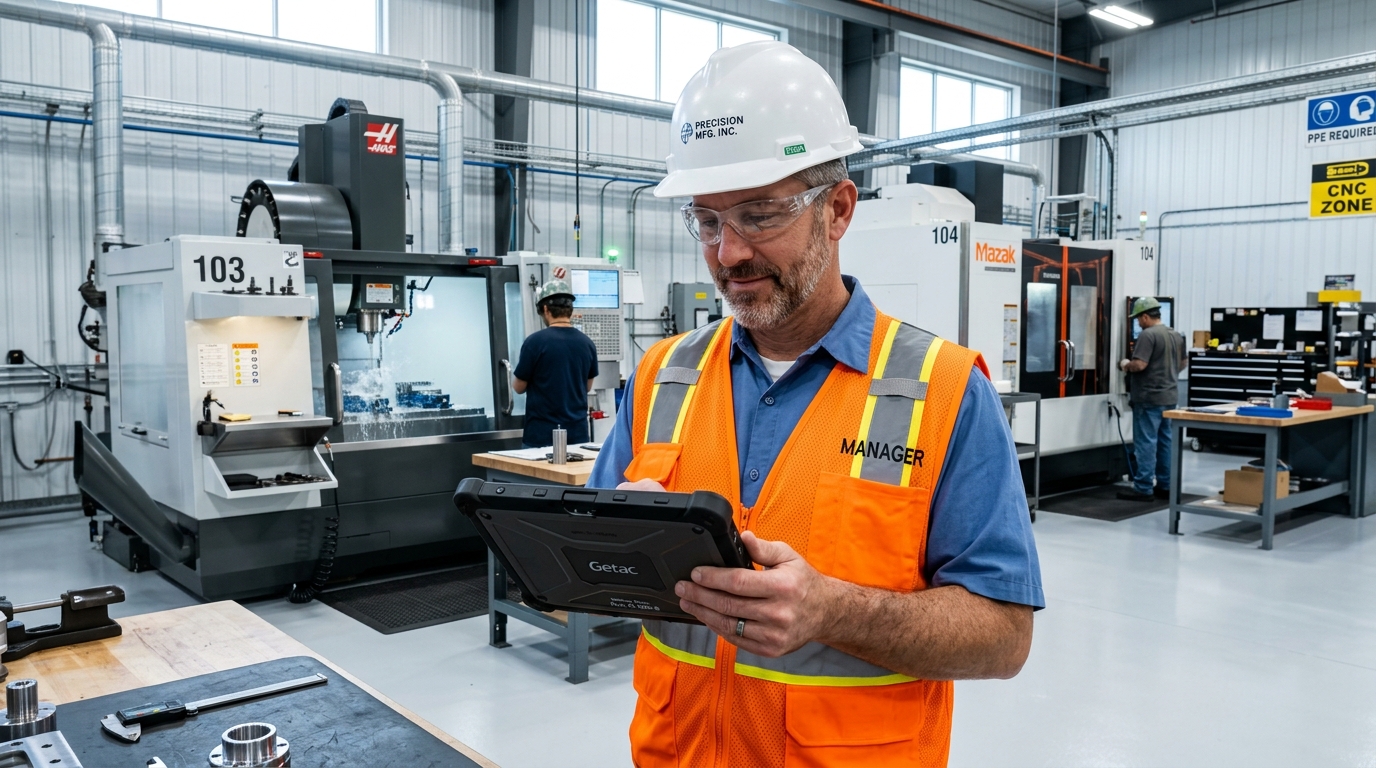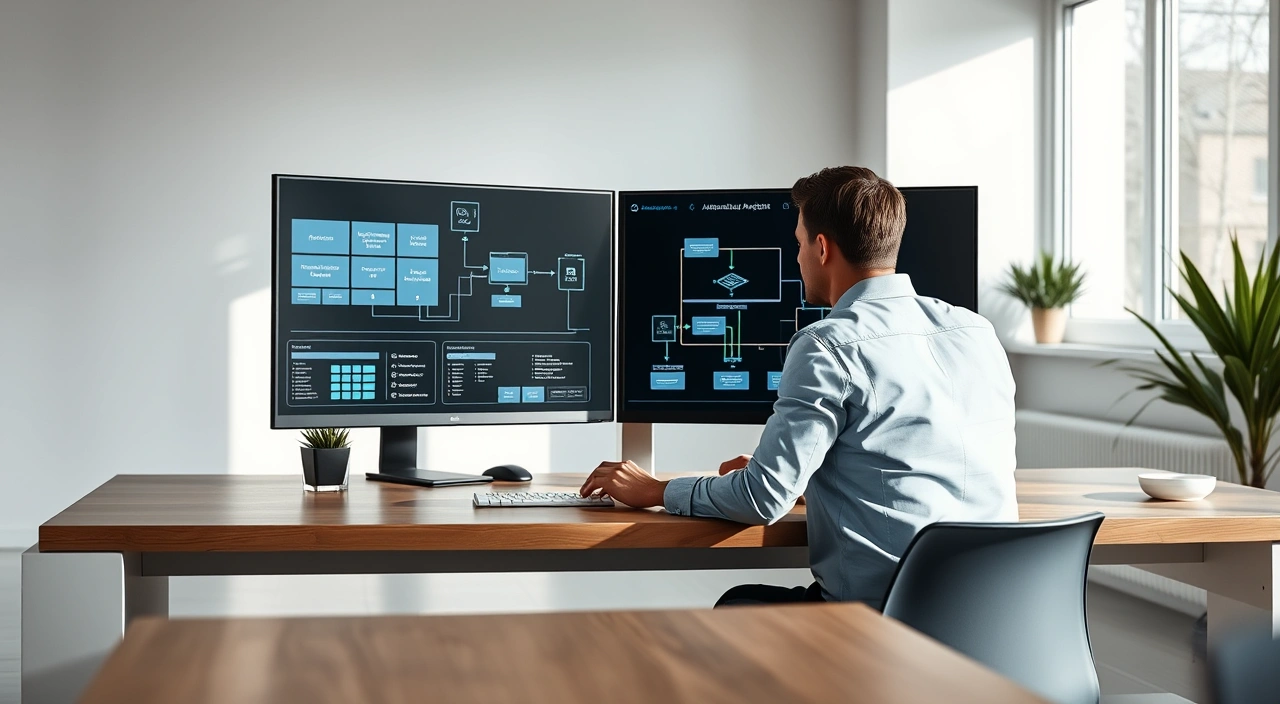
"A comprehensive 3,400-word engineering guide on orchestrating multi-agent systems in production: combining n8n deterministic webhook pipelines with LangGraph cyclical state machines, Model Context Protocol (MCP) tool calling, and NetSuite/SAP ERP integrations."
Key Takeaways
- 1Single-agent architectures fail on complex multi-step enterprise operations: multi-agent systems divide workflows into specialized roles (Ingestion, Validation, Tool Execution, Compliance Review).
- 2n8n serves as the ideal deterministic middleware bus: managing incoming webhooks, queue throttling, document OCR parsing, and visual operational monitoring.
- 3LangGraph provides the core reasoning and state machine layer: supporting cyclical graph transitions, memory persistence via PostgreSQL checkpointers, and native human-in-the-loop interrupts.
- 4Model Context Protocol (MCP) standardizes ERP tool calling: allowing custom NetSuite and SAP connectors to be shared securely across multiple agents.
- 5Human-in-the-loop governance is non-negotiable for enterprise operations: actions exceeding dollar thresholds or ambiguity limits trigger interactive Slack approval checkpoints.
- 6Automated regression evaluation harnesses testing 500+ historical transaction records prevent prompt regressions before deployment to production.
- 7Private cloud VPC deployment with enterprise zero-data-retention agreements protects proprietary corporate data from public model training.
Table of Contents
- 1. The Limits of Single-Agent Prompts in Enterprise Operations
- 2. The Hybrid Multi-Agent Topology: n8n Bus + LangGraph Core
- 3. Stateful Agent Execution with LangGraph Checkpointers
- 4. Standardizing ERP Tool Calling with Model Context Protocol (MCP)
- 5. Human-in-the-Loop Orchestration: Interactive Slack Checkpoints
- 6. Enterprise Security Perimeter & Private VPC Deployment
- 7. A Representative Scenario: Automated B2B Order Ingestion & 3-Way Matching
- 8. Production Evaluation Harnesses & Continuous Regression Testing
1. The Limits of Single-Agent Prompts in Enterprise Operations
When enterprise teams attempt to automate complex back-office workflows with a single monolithic AI prompt, they inevitably encounter reliability ceilings. Ingesting an incoming purchase order, extracting line items, verifying vendor pricing in NetSuite, checking warehouse inventory in SAP, and issuing an invoice modification requires dozens of distinct tools and conditional rules.
When a single LLM prompt is burdened with dozens of tools, tool selection accuracy drops significantly. Multi-agent systems solve this through separation of concerns: dividing a complex business process into specialized agents with narrow system prompts, isolated tool sets, and typed state handoffs.
2. The Hybrid Multi-Agent Topology: n8n Bus + LangGraph Core
A common debate in enterprise AI engineering is whether to choose low-code workflow tools like n8n or code-first orchestration libraries like LangGraph. In production, the most resilient architectures do not choose between them: they combine both.
In FactoryJet hybrid architecture:
- n8n acts as the Integration Bus: It ingests webhooks from email servers, forms, and CRMs, handles queue buffering, extracts PDF text via OCR, executes deterministic data formatting, and provides visual monitoring for IT operations.
- LangGraph acts as the Reasoning Engine: When an event requires multi-step decision making, tool selection, or conversational evaluation, n8n invokes a containerized LangGraph microservice. LangGraph executes stateful graph transitions, calls external tools via MCP, and returns structured results back to n8n for final ERP commit.
3. Stateful Agent Execution with LangGraph Checkpointers
Real-world business workflows are rarely instantaneous. A purchase order approval or vendor dispute resolution may take hours or days to receive human authorization.
LangGraph models workflows as cyclical state graphs. By attaching a PostgreSQL or Redis checkpointer, the complete memory state (including conversation messages, tool outputs, and intermediate decisions) is persisted after each step. The graph can pause execution indefinitely (an interrupt), wait for an external webhook, and resume without re-running previous expensive LLM inferences.
4. Standardizing ERP Tool Calling with Model Context Protocol (MCP)
Connecting AI agents to enterprise software of record (NetSuite, Dynamics 365, SAP, Salesforce) requires structured tool definitions. Hardcoding custom API calls inside individual agent prompts creates brittle, unmaintainable code.
We utilize Model Context Protocol (MCP), the open standard Anthropic introduced for connecting AI applications to external tools and data sources, to standardize tool interfaces. Each backend system exposes a typed MCP server providing bounded operations (e.g. get_customer_credit_limit, create_sales_order_draft). The MCP server enforces JSON schema validation, transaction dollar limits, and field-level permissions before any database write occurs.
5. Human-in-the-Loop Orchestration: Interactive Slack Checkpoints
Autonomous agents in enterprise environments must never operate without bounded financial governance. We configure automated human-in-the-loop decision checkpoints:
- Deterministic Escalation Triggers: Invoices exceeding $5,000, new vendor bank account changes, or confidence scores below 0.90 automatically pause execution.
- Interactive Notifications: The agent posts an executive situation summary and line-item comparison table directly into a dedicated Slack or Microsoft Teams channel.
- One-Click Action: The human operator clicks Approve, Modify, or Reject. The webhook sends the signal back to the LangGraph checkpointer to finalize or abort the ERP transaction.
6. Enterprise Security Perimeter & Private VPC Deployment
Enterprise security policies prohibit sending proprietary customer records, financial ledgers, and contract terms to shared public AI platforms.
Our multi-agent stacks deploy entirely inside your private AWS (ECS/EKS), Google Cloud (Cloud Run/GKE), or Microsoft Azure virtual private cloud (VPC). All AI inference calls utilize enterprise zero-data-retention agreements with Anthropic and OpenAI, or connect to self-hosted open-weights models running on private GPU instances.
7. A Representative Scenario: Automated B2B Order Ingestion & 3-Way Matching
The walkthrough below illustrates a realistic outcome pattern for this architecture. It is a representative example built from common wholesale distribution workflows, not a report of results from a specific named client engagement.
Consider a wholesale distributor processing thousands of monthly inbound purchase orders via PDF email attachments. A 4-agent production system built on this architecture would typically be structured like this:
- Ingestion Agent (n8n): Monitors mailbox, extracts PDF attachments, and parses structured text via vision OCR.
- Validation Agent (LangGraph): Resolves buyer identity, matches product descriptions against NetSuite SKU catalog, and validates tiered contract pricing.
- Inventory & Credit Agent (MCP): Queries NetSuite for live stock across 4 warehouses and verifies customer Net 30 credit availability.
- Execution Agent: Creates sales order drafts in NetSuite and notifies warehouse fulfillment teams in Slack.
Illustrative outcome: architectures like this can realistically cut average order processing time from around 45 minutes down to roughly 30 seconds, with the large majority of orders (commonly 80 percent or more) processing with zero human intervention. Actual results vary with document quality, ERP data cleanliness, and how much validation logic your specific order types require.
8. Production Evaluation Harnesses & Continuous Regression Testing
Prior to deploying prompt updates or model version upgrades, the entire graph runs through automated evaluation test suites. We measure tool accuracy, parameter precision, and tone consistency against 500+ historical edge cases, ensuring production reliability is mathematically proven before code ships.
Ready to Build Enterprise AI Workflows?
Speak directly with founder Bhavesh Barot. We will analyze your target operational workflows, ERP systems, and architect a secure multi-agent blueprint for your team.
Book Architecture Strategy Call →Free assessment
Find Out if an AI Agent Can Take the Task
Name one task your team repeats every day. We tell you whether an agent can do it or whether a tool you can buy already does, and we build a demo on your own sample files before you sign.
Frequently Asked Questions
Why combine n8n and LangGraph instead of using only one framework?
How does LangGraph persist state across long-running asynchronous workflows?
How do agents execute safe tool calls against enterprise ERPs like NetSuite and SAP?
What is the role of Model Context Protocol (MCP) in multi-agent orchestration?
How do you implement human-in-the-loop approvals without stalling automated queues?
How do you monitor and evaluate agent accuracy in production?
Can the entire multi-agent system be deployed on private enterprise infrastructure?
How do you handle rate limits and API throttling on legacy ERP systems?
What is the difference between multi-agent collaboration and a single monolithic prompt?
How do you prevent prompt injection attacks in enterprise workflows?
Who owns the custom code, state graphs, and connectors after the build?
How do we schedule a multi-agent architecture review with FactoryJet?

Bhavesh Barot
Founder & CEO
Founder & CEO of FactoryJet, an ecommerce and AI services company that has served 500+ businesses across the US, UK, UAE, and India. Writes about ecommerce builds, AI agents, and AI search.
Related reading
- AI Agent Architecture for Manufacturing: Automated RFQ Quoting & ERP Sync (2026)Technical blueprint for manufacturing AI agents: PDF CAD drawing parsing, multi-tier BOM costing, and bi-directional NetSuite and SAP ERP synchronization.
- Enterprise ERP AI Agents: NetSuite, SAP & Epicor Implementation Guide (2026)Technical architecture guide for integrating autonomous AI agents with Oracle NetSuite SuiteTalk REST, SAP S/4HANA OData/BAPI, and Epicor Kinetic REST v2 APIs.
- n8n vs Zapier vs Make: Which Is Best for Enterprise AI Workflow Automation in 2026?A comprehensive 3,500+ word engineering guide comparing n8n, Zapier, and Make: execution pricing at scale, private cloud VPC security, LangChain AI agent nodes, error recovery, and migration strategies.