Chemical & Pharma AI Agents with Live LIMS & SAP QM Sync..
We engineer validated AI agents for chemical manufacturers. We serve biopharma labs and specialty formulators. Our agents automate electronic batch record (EBR) reviews. They accelerate GHS 16-section Safety Data Sheet (SDS) authoring. They enforce FDA 21 CFR Part 11 audit trails. They sync quality release data bi-directionally. They integrate LabWare, SampleManager, Waters CDS, and SAP.
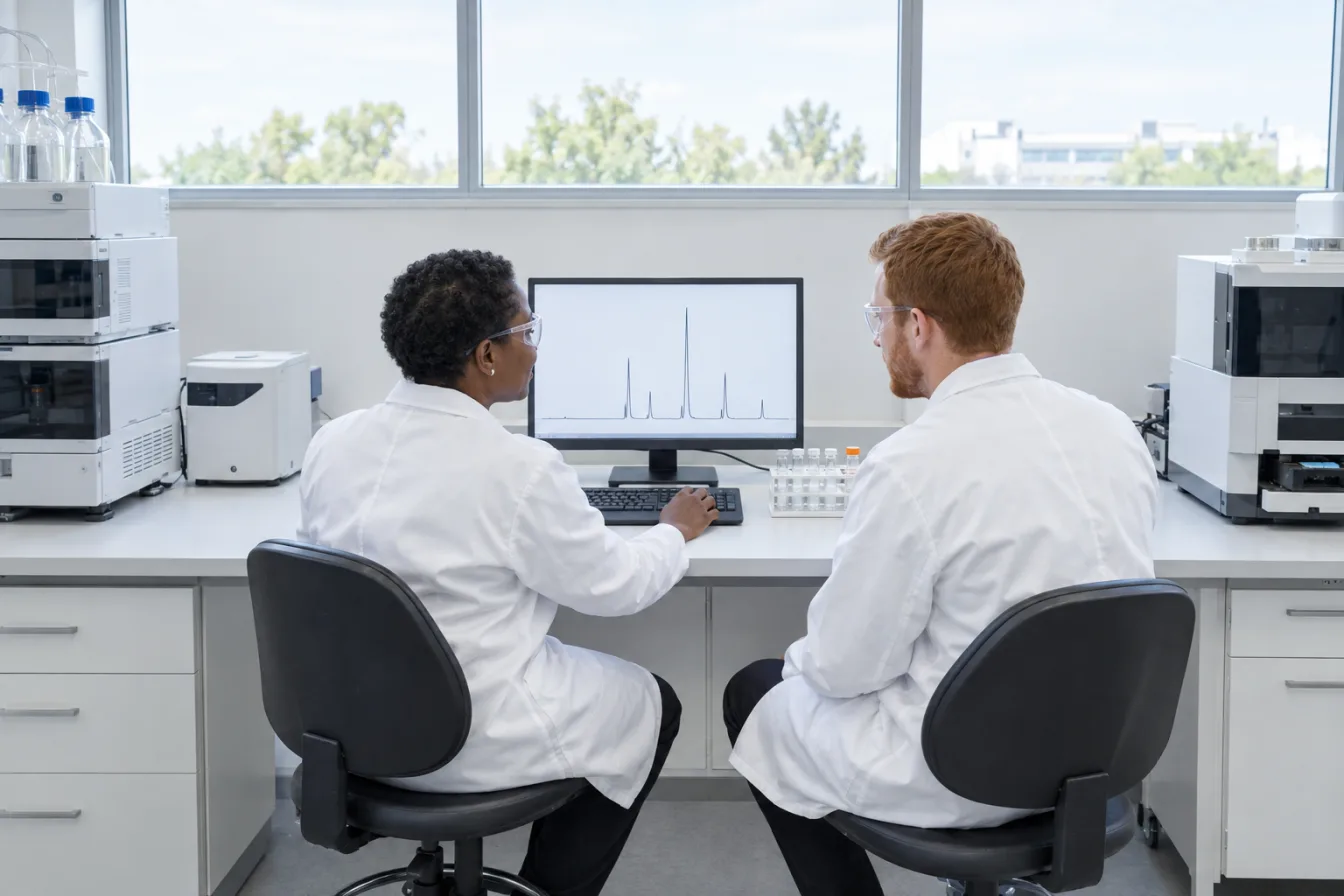
What is a Chemical & Pharmaceutical AI Agent?.
A chemical AI agent is automated software. It connects to LIMS platforms like LabWare. It connects to manufacturing execution systems. It syncs with ERP tools like SAP QM. It interfaces with regulatory databases. It automates electronic batch record audits. It flags out-of-specification deviations instantly. It calculates GHS chemical hazard classifications. It authors 16-section Safety Data Sheets. It maintains FDA 21 CFR Part 11 cryptographic audit trails. It removes manual data-entry bottlenecks.
The Cost of Regulatory Bottlenecks in Chemical & Pharma Plants.
Manual quality reviews delay releases. Paper-based batch records create bottlenecks. Compliance backlogs constrain factory throughput.
Finished inventory often sits in quarantine. Delays last one to two weeks. QA staff verify hundreds of pages. They check equipment logs by hand. They review chromatography runs manually. They verify analytical release certificates slowly.
Source: ISPE Pharma 4.0&trade. Survey on batch release digitalization.OSHA updated HazCom rules in 2024. Regulators estimated high revision volumes. Over 94 percent of SDS documents need updates. About 64 percent of shipping labels need updates. The rule affects 111,000 firms.
Source: OSHA Hazard Communication Standard Final Rule (2024).McKinsey studied pharmaceutical quality control. Digital lab workflows cut cycle times. Automated reviews reduce lead times by 60 to 70 percent. Manual reviews lag far behind. Model your savings with our AI agent ROI calculator.
Source: McKinsey & Company, Life Sciences Practice.Engineered for High-Stakes GxP and Chemical Manufacturing.
Automate quality control workflows. Speed up regulatory work. Keep strict compliance across laboratory operations.
Electronic Batch Record (EBR) Verification.
The agent parses executed production records. It reviews autoclave logs rapidly. It checks Waters CDS release data. It flags parameter deviations immediately. It catches missing signatures. It flags out-of-trend values instantly.
- • Sub-60s batch record audit.
- • Master batch record diffing.
- • Automated deviation summaries.
GHS 16-Section Safety Data Sheet Authoring.
The system calculates aquatic toxicity limits. It verifies chemical flash points. It evaluates dermal classifications from CAS matrices. It authors standardized OSHA HCS SDS files. It delivers GHS documents in seconds.
- • Multi-lingual GHS generation.
- • CAS hazard mixture calculations.
- • TSCA / REACH / Prop 65 screening.
FDA 21 CFR Part 11 Cryptographic Audit Trails.
The system writes append-only audit records. It logs every user action. It tracks data extraction events. It validates quality approval steps. Dual-factor electronic signatures gate each entry.
- • ALCOA+ data integrity compliance.
- • Tamper-evident cryptographic hashing.
- • Role-based electronic signatures.
Supplier Certificate of Analysis (CoA) Ingestion.
The system extracts assay purity values. It reads moisture percentages. It captures heavy metal limits from PDFs. It checks values against internal specs. Non-conforming lots flag instantly.
- • Multi-vendor CoA parsing.
- • Automatic quarantine release flags.
- • Direct LIMS sample record creation.
eCTD Module 3 CMC Dossier Assembly.
The engine compiles stability test data. It tracks container studies. It formats plant flowcharts. It organizes eCTD sections. Regulatory teams review drafts quickly.
- • IND and NDA Module 3 formatting.
- • Analytical method validation logs.
- • Verifiable data traceability.
Bi-Directional LIMS & ERP Quality Sync.
The agent connects directly to LabWare. It integrates Thermo Fisher SampleManager. It syncs Waters CDS chromatography platforms. Approved results push to SAP QM. Status updates flow into NetSuite.
- • REST and SOAP API connectors.
- • Real-time ERP lot status update.
- • Zero manual transcription errors.
Engineered for High-Stakes Regulatory Workflows.
Generic software struggles with chemical mixtures. It fails on strict GxP validation rules. It mishandles specialized analytical data streams. We build purpose-engineered AI agents for your industry.
Formulation Optimization & Automated GHS SDS Generation.
Specialty chemical formulators handle coatings, adhesives, and lubricants. Staff spend heavy time on manual tasks. They review raw material safety sheets by hand. They calculate hazard statements one by one.
Our formulation agent reads chemical recipes. It checks boiling points and vapor pressures. It evaluates component toxicity values. It authors compliant 16-section SDS files rapidly. When supply disruptions occur, it suggests substitutions. It applies Hansen solubility matching accurately.
- GHS Hazard Calculation.
- Hansen Solubility Matching.
- Multi-Lingual SDS Export.

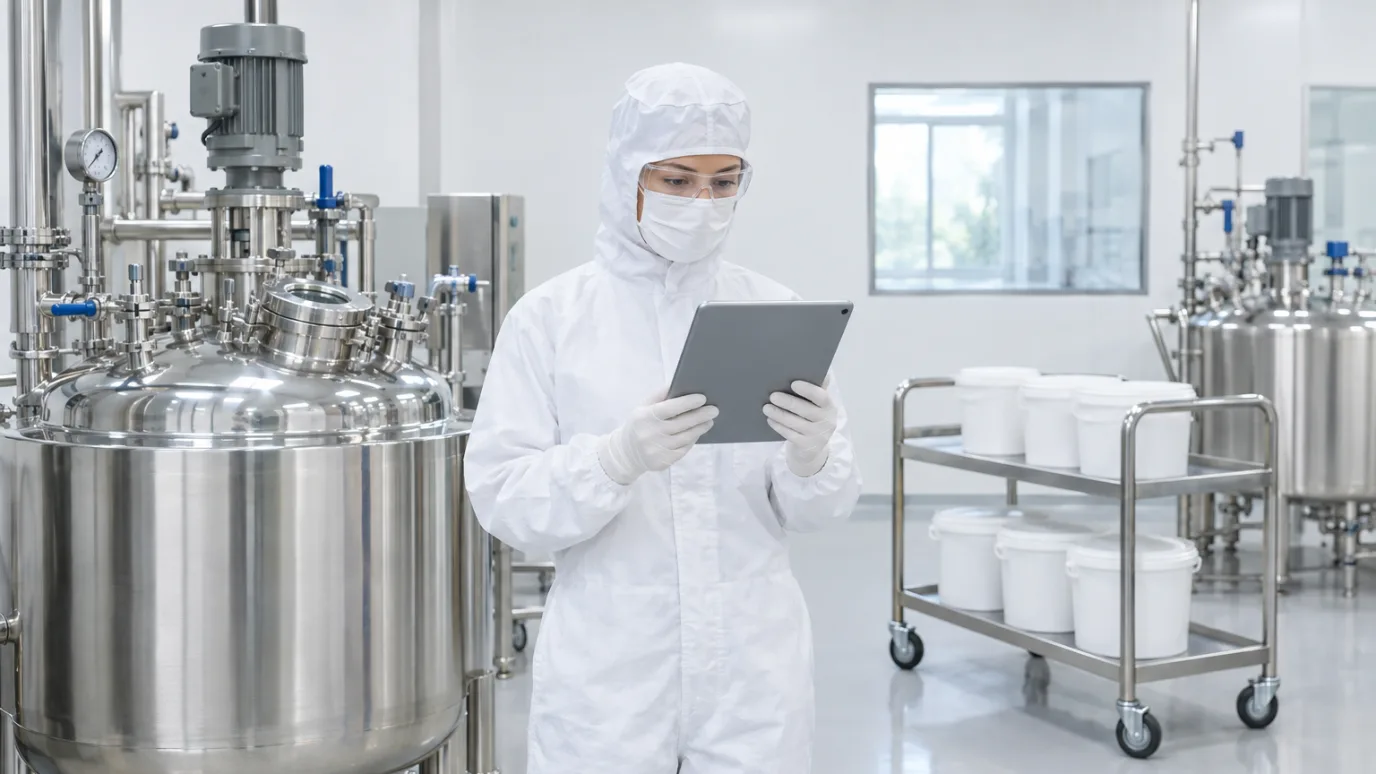
Automated EBR Reconciliation & Out-of-Specification (OOS) Triage.
Pharma plants face batch release delays. Quality assurance teams verify hundreds of pages. They check operator signatures manually. They inspect autoclave cycles by hand. They review analytical chromatography runs line by line.
Our GMP agent scans electronic batch records. It checks records against master templates. It detects parameter deviations quickly. It flags missing initials. It correlates chromatography peaks with Waters CDS tools. Validated summaries go to the Qualified Person. Sign-offs proceed without delays.
- Master Batch Record Diffing.
- Chromatography Peak Verification.
- Veeva Vault QualityDocs Sync.
Cryptographic Audit Logging & CAPA Root-Cause Investigation.
Regulatory audits require instant traceability. FDA, EMA, and ISO inspectors review records closely. Auditors inspect every change log and user session. They examine deviation reports in detail.
Our compliance agent creates immutable audit logs. The system supports 21 CFR Part 11 standards. It meets FDA ALCOA+ data-integrity guidance. When deviations occur, the agent pulls batch history. It reviews sensor telemetry. It inspects equipment maintenance history. It drafts structured CAPA investigation reports with exact citations.
- ALCOA+ Data Integrity.
- Dual-Factor E-Signatures.
- CAPA Investigation Synthesis.


Supplier Certificate of Analysis (CoA) Ingestion & Lot Tracking.
Chemical manufacturers receive thousands of shipments yearly. Each shipment includes a vendor Certificate of Analysis. Vendor PDFs arrive in differing formats. Test units vary across suppliers. Electronic data interchange can automate intake.
Our supply chain agent parses vendor CoAs instantly. It compares assay percentages to purchase specs. It checks viscosity limits and moisture thresholds. It updates raw material lot status in SAP. It syncs records with NetSuite. It flags non-conforming shipments before unloading starts.
- Automated CoA OCR & Spec Check.
- SAP / NetSuite Lot Release Sync.
- Supplier Quality Scoring.
Automated Chemical Inventory Screening & Regulatory Declarations.
Selling chemicals in North America and Europe requires screening. Teams must track CAS numbers against restriction lists. Three main frameworks apply: EPA TSCA Section 8, California Proposition 65, and the EU REACH SVHC list.
Our regulatory agent tracks chemical lists. It checks active formulas. It cross-references your bills of materials. It creates customer compliance certificates fast. It drafts regulatory notices.
- TSCA & REACH Restriction Screening.
- Prop 65 Safe Harbor Analysis.
- Customer Compliance Certificates.
Want to Watch This Work Against Your Own Data?
Bring a sample batch record or SDS to a working session. We show how the agent parses it live. See results before making any commitment.
Enterprise Chemical & Pharma AI Engineering Blueprint.
We build validated AI pipelines for life sciences firms. We support chemical producers with deterministic software.
- CHEM-ARCH-01.
FDA 21 CFR Part 11 & Annex 11 Compliance.
Cryptographic logs record every action. Dual-factor authentication verifies users. Append-only records support FDA and GxP compliance rules.
- CHEM-ARCH-02.
Bi-Directional LIMS & CDS Connectivity.
Native REST connectors sync test results. The agent transfers sample logs. It syncs chromatography peaks with LabWare, SampleManager, and Waters CDS.
- CHEM-ARCH-03.
Deterministic GHS Mixture Calculation Engine.
Rule-based math calculates acute toxicity. It rates flammability. It sets water hazard classes. It prevents false outputs.
- CHEM-ARCH-04.
Master Batch Record (MBR) Diffing Pipeline.
OCR pipelines read executed electronic batch records. The agent compares critical parameters. It checks time intervals against validated master records.
- CHEM-ARCH-05.
Automated Supplier CoA Ingestion & Spec Triage.
The agent extracts chemical assay percentages. It reads moisture limits. It matches impurity levels against raw material acceptance specs.
- CHEM-ARCH-06.
eCTD Module 3 CMC Dossier Assembly.
The platform aggregates stability test records. It compiles container closure studies. It formats data into structured eCTD Module 3 sections.
- CHEM-ARCH-07.
Air-Gapped & Sovereign Cloud Deployment.
We deploy models on single-tenant VPCs. We host on local GPU servers. We orchestrate clusters with Kubernetes. Systems run behind strict firewalls.
- CHEM-ARCH-08.
Annual Product Quality Review (APQR) Synthesis.
The agent gathers 12 months of manufacturing records. It tabulates process metrics like Cpk and Ppk. It formats data into APQR reports.
- CHEM-ARCH-09.
Multi-Lingual Global SDS Authoring Pipeline.
The system writes 16-section Safety Data Sheets. It supports English, Spanish, French, German, and Mandarin. It adds local emergency hotlines.
- CHEM-ARCH-010.
100% Client Code & Infrastructure Ownership.
You receive complete Git repository access. You own Python backend services. You receive Docker setups. We charge zero per-user software fees.
4-Phase GxP Implementation & Validation Roadmap.
Go from regulatory audit to production deployment in 8 to 12 weeks.
- PHASE 01 // WEEKS 1-3.
GxP Schema & LIMS Audit.
We map your LIMS database schemas. We inspect master batch record templates. We review standard operating procedures. We configure zero-data-retention environments.
Deliverable: User Requirements Specification (URS) & Validation Plan.. - PHASE 02 // WEEKS 4-6.
Parsing & GHS Rules Build.
We build multi-modal parsing pipelines. We ingest executed batch records and supplier CoAs. We process analytical chromatography runs. We encode GHS classification rules.
Deliverable: Functional Design Specification (FDS) & Custom Extractors.. - PHASE 03 // WEEKS 7-9.
LIMS Sync & QA Console Staging.
We deploy a side-by-side QA review dashboard. Quality engineers verify batch records. They review deviation flags. They validate automated LIMS and SAP QM synchronization.
Deliverable: QA Review Console & Sandbox Integration Validation.. - PHASE 04 // WEEKS 10-12.
CSV / CSA Validation & Handover.
We execute IQ, OQ, and PQ test protocols. We train quality assurance staff. We deliver complete Git repositories. You receive full intellectual property ownership.
Deliverable: Executed IQ/OQ/PQ Package & Full Source Code..
FactoryJet Custom Life Sciences AI vs. Generic SaaS Tools.
Chemical leaders build owned AI infrastructure. They eliminate costly per-seat software licensing fees.
| Capability / Feature. | FactoryJet Custom AI | Generic Cloud SaaS | Manual QA & Regulatory Staff |
|---|---|---|---|
| Batch Record Audit Speed. | Under 60 Seconds. | 15 to 30 Minutes. | 8 to 14 Days. |
| LIMS & SAP QM Integration. | Native LabWare & SampleManager Sync. | Manual CSV Export/Import. | Manual Re-Keying. |
| FDA 21 CFR Part 11 Audit Trail. | Cryptographic Immutable Logs. | Basic Application Logging. | Paper Binder Signatures. |
| Software Cost Structure. | 100% Owned, $0 Per-Seat Fee. | $300 - $800 / user / month. | $120k - $160k QA specialist salary. |
| Formulation Privacy & Enclaves. | Air-Gapped Private VPC or On-Prem. | Multi-Tenant Shared Cloud. | Internal Filesystem. |

Direct Engineering Oversight with Founder Bhavesh Barot.
Regulated manufacturing requires exact execution. Quality teams need clear validation records. They need total data sovereignty. Founder Bhavesh Barot leads every chemical AI project. We review your master batch records together. We inspect LIMS data flows during discovery. We fix GHS authoring delays quickly.
You work directly with senior systems architects. Our team has built data pipelines for over a decade. We build dependable, auditable software. Your organization owns and operates the platform permanently.
Explore Our Granular Enterprise Automation Capabilities.
Manufacturing AI Agents →.
Autonomous shop floor scheduling. Live ERP sync. Predictive maintenance for industrial plants.
Healthcare AI Agents →.
HIPAA-compliant voice reception. Live EHR scheduling. Clinical triage for medical clinics.
Enterprise AI Workflow Automation →.
Multi-system document parsing. Live database sync. Human-in-the-loop review pipelines.
Legal AI Agents →.
Automated contract review. E-signature audit trails. Compliance document automation for legal teams.
Agriculture Equipment AI Agents →.
Real-time telemetry monitoring. Parts compliance tracking. Dealer service automation for equipment makers.
// CHEMICAL & PHARMA AI QUESTIONS & ANSWERS
Frequently Asked Questions on Chemical & Pharmaceutical AI.
Everything quality directors and lab managers need to know. Learn about GxP validation and SDS authoring. Understand full software ownership.
Topics
Can’t find your answer?
Talk to the founderBatch Records & GMP Compliance.
How do AI agents automate pharmaceutical Electronic Batch Record (EBR) review?
Our pharma AI agents parse long documents. They read executed batch records. They check equipment logbooks. They review release testing certificates. The agent cross-checks temperature logs. It verifies mixing durations. It confirms raw material lot numbers. It tests yield tolerances against the Master Batch Record. It flags deviations. It marks out-of-specification events. Each finding includes exact timestamps and page citations.
Can the AI agent identify root causes for out-of-trend (OOT) manufacturing deviations?
Yes. The agent correlates batch release data. It checks environmental monitoring logs. It reviews supplier raw material CoAs. It inspects equipment calibration logs. It drafts structured CAPA outlines. Findings include verifiable source citations. Quality engineers review each draft. The agent speeds up root-cause research. It preserves required human sign-off.
How does the system ensure GxP data integrity during automated QA checks?
Every ingestion step records in audit logs. These logs use tamper-evident hashes. The pipeline strictly follows GxP rules. It complies with FDA GMP guidelines. It enforces ALCOA+ principles. Every record remains attributable and legible. Entries stay contemporaneous and original. They remain accurate and complete. Records stay consistent and enduring. Inspectors can review any decision on demand.
Can the agent review raw material Certificates of Analysis (CoA) against procurement specs?
Yes. The agent extracts chemical assay percentages. It measures moisture content. It verifies impurity limits. It tracks microbial thresholds. Data comes from supplier PDF CoAs. It compares values against acceptance rules. Out-of-spec shipments flag immediately. It cites the exact CoA line. Quality teams receive immediate alerts. It never releases inventory automatically.
Can the agent support review-by-exception workflows instead of full manual batch record review?
Yes. Quality teams set parameter ranges first. The agent pre-screens executed batch records. It routes genuine exceptions to human reviewers. It flags out-of-trend values. Missing signatures alert supervisors. Compliant batches move to summary queues. Qualified Persons review summaries quickly. This cuts review time significantly.
Can the AI agent support stability study trending for shelf-life and expiry-date decisions?
Yes. The agent ingests stability chamber data. It checks long-term conditions. It monitors intermediate conditions. It tracks accelerated study points. It plots degradation trends against limits. Out-of-trend values trigger early warnings. This avoids out-of-specification failures. Teams receive early warnings on shelf-life. Data exports into annual stability reports.
SDS Authoring & Formulation.
How does the chemical AI agent author GHS-compliant Safety Data Sheets (SDS)?
The agent inspects product formulas. It checks CAS numbers. It reads concentration levels. It reviews raw material hazard classes. It calculates water toxicity. It checks flash points. It finds acute toxicity limits. Data fills all 16 GHS sections. Output adds pictograms and warning text. It lists safety gear rules.
Can the agent update global SDS libraries when chemical regulations change?
Yes. Chemical regulations update frequently. Rules change across EPA TSCA lists. California Proposition 65 lists update too. EU REACH Annex XVII changes regularly. The agent scans chemical inventories. It identifies affected product SKUs. It recalculates hazard classes. It drafts updated revisions with changelogs.
How does the formulation optimization agent recommend raw material substitutions?
The agent queries property data. It checks solubility numbers. It reviews Hansen coordinates. It checks viscosity and costs. Supply gaps disrupt plants. The agent finds substitute surfactants. It suggests replacement polymers. Swaps match performance specs. Recipes protect profit margins. Chemists review and approve swaps quickly.
Does the system support multi-lingual GHS SDS authoring for international exports?
Yes. The agent generates 16-section SDS documents. It authors files in English and Spanish. It supports French and German. It writes in Japanese and Mandarin. Regional exposure limits update accurately. These include OSHA PEL and ACGIH TLV. They include REACH DNEL limits. Mandated emergency hotlines attach automatically. All language versions stay in sync.
How does the agent keep SDS documents current when a supplier changes a raw material formulation?
Suppliers sometimes change formulas. Downstream SDS files then require updates. The agent finds all affected blends. It flags CAS concentration shifts. It recalculates hazard classifications. It drafts revised 16-section SDS files. It updates document repositories. This prevents non-compliant shipments.
FDA 21 CFR Part 11 & Audits.
Is the AI architecture compliant with FDA 21 CFR Part 11 and EU Annex 11 electronic signature rules?
Yes. We engineer tamper-evident audit logs. Every user action generates a timestamped record. Cryptographic hashing secures every event. Changes require dual-factor electronic signatures. Audit trails meet ALCOA+ guidelines. They stand up to FDA inspections. Validation packets include full IQ, OQ, and PQ records.
Can the agent prepare Chemistry, Manufacturing, and Controls (CMC) regulatory dossiers?
Yes. The agent aggregates analytical validation summaries. It compiles stability testing time-points. It tracks container closure integrity data. It formats manufacturing flowcharts. It builds structured eCTD Module 3 outlines. These support IND and NDA submissions. Specialists write the final narrative. The agent removes days of data gathering.
How does the agent assist with annual product quality reviews (APQR / PQR)?
The agent gathers 12 months of batch data. It tabulates statistical Cpk and Ppk metrics. It charts yield variability across lots. It synthesizes customer complaint trends. Output formats into APQR regulatory filings. Quality teams avoid weeks of spreadsheet work. Reviewers check structured drafts in days.
Can the system detect potential cross-contamination risks in multi-product manufacturing facilities?
Yes. The agent reviews clean-in-place records. It evaluates toxicological HBEL limits. It checks PDE calculations. It reviews swab test assay results. Shared equipment runs exceeding thresholds flag immediately. This protects multi-product manufacturing plants. Shared drug lines verify cleaning data first. No new batch starts without verification.
Can the agent generate REACH SVHC or Proposition 65 compliance declarations for individual customers?
Yes. Customers often request regulatory declarations. Examples include REACH SVHC statements. Another is California Proposition 65 documentation. The agent checks current ECHA lists. It checks OEHHA candidate lists against CAS numbers. It drafts signed compliance letters in minutes. Regulatory specialists save days of research.
LIMS Sync & IP Ownership.
Which Laboratory Information Management Systems (LIMS) and ERPs do you integrate with?
We build native bi-directional connectors. We connect LabWare LIMS and SampleManager. We integrate Waters CDS chromatography tools. We sync SAP S/4HANA QM and PP modules. We support Oracle NetSuite and Veeva Vault. We also support Infor and Epicor. Microsoft Dynamics 365 connects via APIs. Middleware like Mulesoft or Boomi works too.
Can quality and lab staff log in with our existing corporate identity system?
Yes. The platform supports corporate single sign-on. It connects via SAML or OAuth. Staff use existing corporate accounts. No separate passwords are required. Role-based access control enforces strict permissions. Admins revoke access centrally upon role changes.
How do you safeguard proprietary chemical synthesis routes and drug formulations?
We deploy isolated private VPC architectures. We support on-premise air-gapped GPU servers. All setups use Zero Data Retention agreements. Chemical formulas never train public models. Synthesis routes remain confidential. Legal teams can audit infrastructure directly. We run regular penetration tests. We sign mutual NDAs and GxP agreements.
Who owns the custom chemical and pharmaceutical AI agent code and models?
Your organization owns 100 percent of source code. You own the Git repositories. You own Python backend services. You own prompt state machines and Docker files. We charge zero per-user licensing fees. Handover includes deployment guides and credentials. The system runs under your control indefinitely.
What is the implementation timeline for a chemical or pharmaceutical AI agent?
Focused SDS authoring engines deploy in 4 to 6 weeks. CoA extraction pipelines follow that timeline. Enterprise GxP systems deploy in 8 to 12 weeks. That includes LIMS setup. It includes IQ, OQ, and PQ records. Timelines depend on connected systems. Historical batch data guides the schedule.
Does the agent maintain ALCOA+ data integrity if we later migrate LIMS or ERP vendors?
Yes. Audit logs store independently of vendor systems. Cryptographic hashes protect each record. Timestamps stay verifiable after migrations. Batch records remain complete and attributable. Files remain available for FDA and EMA inspectors. Data never traps in legacy software.
Ready to Modernize Quality & Compliance with Custom AI?
Book a 30-minute architecture session with our founder. We review your LIMS setup. We inspect your batch record workflows. You receive a fixed-scope proposal in 24 hours.