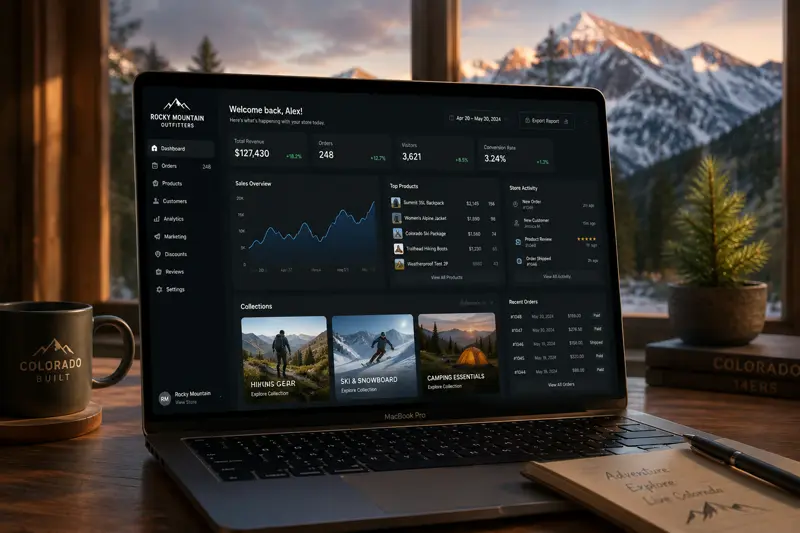
"Denver CO small businesses are building online stores to reach Colorado's outdoor and active lifestyle market, but local ecommerce agencies charge $12,000–$40,000 for Shopify and custom builds. This guide covers what Denver SMBs actually need, Shopify vs. custom, local agency costs vs. alternatives, and how to launch a fully optimized Denver ecommerce store in 7 days."
Key Takeaways
- 1Denver ecommerce development agencies charge $12,000–$40,000 for Shopify or custom online stores, offshore agencies with US support can deliver identical Lighthouse 95+ results for far less.
- 2Denver's outdoor, active lifestyle, and health & wellness market is one of the strongest DTC ecommerce segments in the US, average order values are high and repeat purchase rates are strong.
- 3Shopify is the right platform for most Denver SMBs selling physical products: lower upfront cost, faster launch, and a proven app ecosystem. Custom development is only justified for unique checkout logic, subscription complexity, or marketplace functionality.
- 4Colorado's economic nexus law requires sales tax collection on orders over $100,000/year or 200 transactions: your ecommerce platform must handle multi-state tax collection correctly from day one.
- 5Denver's seasonal retail patterns (ski season, outdoor recreation season) mean your ecommerce site must handle traffic spikes without performance degradation: Shopify and Next.js both handle this well.
- 6Local SEO for Denver ecommerce requires product schema, Google Shopping integration, and service area signals: Denver Metro, Boulder, Fort Collins, and Colorado Springs are distinct commercial audiences.
- 7FactoryJet builds Shopify and custom ecommerce stores for Denver small businesses with 7-day delivery, Lighthouse 95+, full product setup for up to 50 SKUs, and a fixed price quoted in writing after a short scoping call.
Table of Contents
- Ecommerce Development Costs in Denver CO
- Shopify vs. Custom: The Denver Decision Framework
- What Denver Outdoor & Retail Businesses Need
- Colorado Sales Tax: What Your Platform Must Handle
- Google Shopping for Denver Businesses
- Performance Requirements for Denver Ecommerce
- Platform Options for Denver SMBs
- What FactoryJet Offers Denver Businesses
Denver is one of the strongest markets in the US for outdoor, active lifestyle, and health & wellness ecommerce, average order values are high, repeat purchase rates are strong, and Colorado's affluent, outdoors-oriented consumer base spends online. But local Denver ecommerce agencies price accordingly. Here's how to build a world-class online store without the Denver premium.
Ecommerce Development Costs in Denver CO
Denver web development agencies have tracked Colorado's rising cost of living: senior developers bill at $120–$180/hour, and agency overhead in LoDo and Cherry Creek adds another 40–60%. A professional Shopify store setup from a Denver agency typically runs $8,000–$20,000 for a 50-product store. Custom ecommerce development starts at $20,000 and scales to $60,000+ for complex builds.
| Build Type | Denver Local Agency | FactoryJet | Timeline |
|---|---|---|---|
| Shopify (up to 50 products) | $8,000–$20,000 | Fixed quote after scoping | 7 days |
| Shopify (50–200 products) | $12,000–$30,000 | Fixed quote after scoping | 14–21 days |
| Custom ecommerce | $25,000–$60,000+ | Fixed quote after scoping | 6–12 weeks |
Shopify vs. Custom: The Denver Decision Framework
The Shopify vs. custom decision is one of the most consequential choices a Denver SMB makes when launching ecommerce. Most Denver businesses should choose Shopify, it launches in 7 days, costs far less than the $25,000+ a custom build runs, and handles hosting, security, and platform updates automatically.
Custom development earns its premium cost when: your business model requires checkout complexity Shopify can't handle (complex subscription billing tiers, multi-vendor marketplace functionality, custom B2B pricing engines), your projected order volume will exceed Shopify's transaction cost economics at scale ($1M+/year), or your brand demands a fully unique experience that Shopify themes genuinely can't deliver.
For Denver outdoor brands, apparel retailers, health & wellness product companies, and specialty food businesses, Shopify is the right answer. The app ecosystem (Klaviyo, Judge.me, ReConvert, Google Shopping) solves every standard requirement without custom development hours.
Colorado Sales Tax: Non-Negotiable Platform Requirements
Colorado's sales tax system is one of the most complex in the US. The state has a 2.9% base rate, but Denver charges an additional 4.81%, Aurora charges 3.75%, and Boulder charges 3.86%: all on top of county and special district rates. Home-rule cities set their own rules independently.
Your ecommerce platform must handle destination-based tax calculation automatically. Shopify's Colorado tax configuration handles this when properly set up. Custom platforms need TaxJar or Avalara integration, and this should be included in your development scope, not treated as an add-on.
Economic nexus threshold for out-of-state sellers: $100,000 in Colorado sales or 200 transactions. If you're a Denver-based business selling nationally, you'll face nexus obligations in multiple states, ensure your platform handles multi-state tax collection from launch day.
➡ Learn more: FactoryJet ecommerce development services
What FactoryJet Offers Denver Businesses
FactoryJet builds Shopify and custom ecommerce stores for Denver small businesses: 7-day delivery, Lighthouse 95+, up to 50 products loaded, Colorado sales tax configured, Google Shopping feed setup, and 30-day post-launch support. Pricing is fixed and quoted in writing after a short scoping call. US business-hour project management throughout.
➡ Get a free ecommerce quote with PageSpeed proof in 24 hours · See our ecommerce packages
Denver Ecommerce Launch Checklist
Before launching your Denver ecommerce store:
- Colorado sales tax configured for all home-rule cities you sell into
- Product JSON-LD schema on every product page for Google Shopping
- Google Merchant Center account created and feed submitted
- Lighthouse mobile Performance score above 90 before launch
- Shipping rates for Colorado + US domestic zones configured
- Return policy page published (required for Google Shopping approval)
Planning a store
Tell Us What You Sell, and Where
We reply with what we would build and how long it takes. You see a working draft of your store before you sign.
Frequently Asked Questions
How much does ecommerce development cost for Denver CO small businesses?
Should a Denver small business use Shopify or custom ecommerce?
What ecommerce features do Denver outdoor and retail businesses need?
Does Colorado require sales tax collection on ecommerce sales?
How do I get my Denver ecommerce store to show up on Google Shopping?
What is the best ecommerce platform for Denver small businesses in 2026?
How long does ecommerce development take for a Denver small business?
Can FactoryJet build an ecommerce store for my Denver CO business?

Bhavesh Barot
Founder & CEO
Founder & CEO of FactoryJet, an ecommerce and AI services company that has served 500+ businesses across the US, UK, UAE, and India. Writes about ecommerce builds, AI agents, and AI search.
Related reading
- Boise Shopify Development Guide: What Idaho Small Businesses Need to Know in 2026Boise has quietly become one of the most interesting Shopify markets in the Mountain West: an outdoor-recreation economy, a fast-growing downtown, a craft food and beverage scene, and a tech-fluent customer base that buys from local DTC brands on mobile. This guide breaks down what Idaho small businesses actually need from a Shopify build in 2026, from Treasure Valley pickup logistics to BSU football season traffic spikes to when custom Shopify development beats an off-the-shelf theme.
- Best Ecommerce Agency for Small Business in Australia (2026): 8 Agencies ComparedHow to choose an ecommerce agency as an Australian small business in 2026. Eight agencies whose services we checked on their own websites, sourced AUD market ranges for a store build, Shopify's Australian plan prices, and the questions that tell a good agency from a risky one.
- The 6 Best AI Agent Development Companies for Small Business (2026)6 AI agent development companies and platforms for small business, compared. Sourced 2026 cost ranges, build timelines and what to ask before you hire.