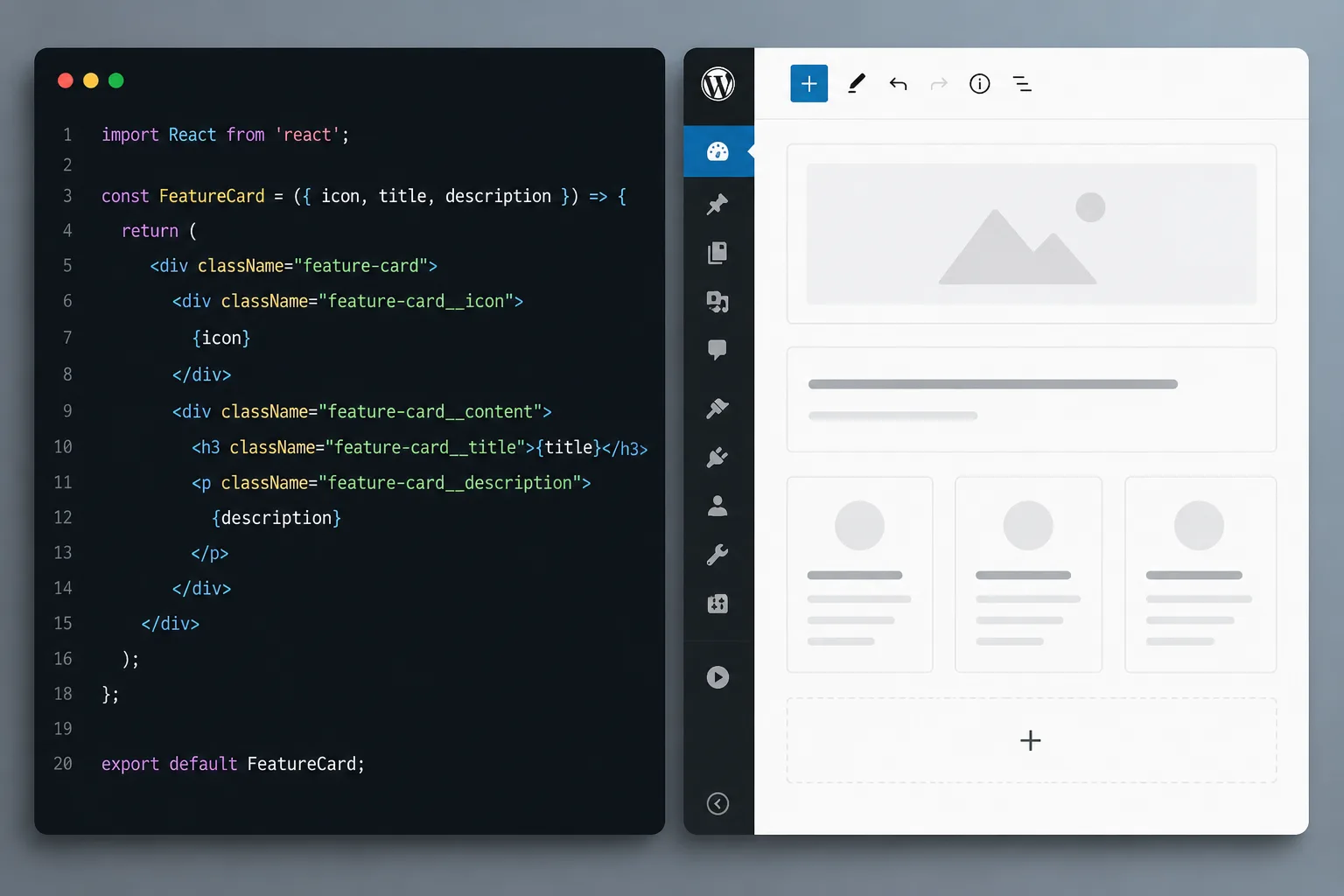
"WordPress powers roughly 43% of the web for good reason: it is fast to launch, cheap to maintain, and well-suited to most US small business sites. Custom web development wins when your product is the website itself. This guide maps the decision to your business model with real US pricing, three-year cost math, and the questions that actually separate the two."
Key Takeaways
- 1WordPress is the right choice for roughly 80% of US small business websites, content-led marketing sites, service businesses, and brochure sites with a blog launch faster and cost less on WordPress than custom development.
- 2Custom web development wins when the website is the product: SaaS dashboards, customer portals, real-time apps, unique workflow logic, or anything where WordPress would require fighting the platform.
- 3Typical US SMB budgets: $5,000–$30,000 for a professionally built WordPress site; $30,000–$200,000 for a custom web application. The 4–10x price gap reflects real engineering scope, not markup.
- 4WordPress security and update burden is the most underestimated cost, plan for $99–$249/month in managed maintenance or a 2–4 hour monthly DIY commitment that most owners don't sustain.
- 5Headless WordPress (WordPress back end, Next.js front end) is the practical hybrid for SMBs that want editor-friendly content and Lighthouse 95+ performance. Budget $15,000–$45,000.
- 6Plugin sprawl is the single biggest cause of WordPress sites breaking. Keep the active plugin count under 20 and audit annually: every plugin is a third party with access to your database.
- 7FactoryJet builds both WordPress sites and custom web applications, with 7-day delivery on standard WordPress builds. We recommend the platform that fits your business, not the platform we want to sell.
Table of Contents
- The Real Question Behind "Custom or WordPress?"
- Side-by-Side: 11 Factors That Actually Matter
- When WordPress Wins for US Small Businesses
- When Custom Web Development Wins
- The Hybrid Path: Headless WordPress + Next.js
- Three-Year Cost of Ownership Math
- The Maintenance Reality No One Tells You
- What FactoryJet Builds on Both Sides
Ask ten developers whether a US small business should choose WordPress or custom web development and you'll get ten different answers, most of them shaped by what that developer prefers to build. The honest answer depends on a question almost no one asks first: is the website your storefront, or is the website your product? Get that one right and the rest of the decision falls into place.
Both options are legitimate in 2026. WordPress still powers roughly 43% of the web, and that share isn't shrinking, for good reason. Custom development isn't a status symbol, it's a specific tool for a specific job. This guide gives you the framework, the numbers, and the scenarios so you can make the call yourself before any agency tries to sell you a quote.
The Real Question Behind "Custom or WordPress?"
Most platform debates focus on features. The framework that actually predicts the right answer focuses on three questions: What does your website need to do? How often does it need to change? And who maintains it after launch?
If your website's job is to publish content, generate leads, and represent your brand, and that job doesn't fundamentally change every six months: WordPress is built for you. Its plugin ecosystem, content editor, and theme architecture solve marketing-site problems out of the box.
If your website's job is to run logic that's specific to your business, bookings with custom rules, multi-step approval flows, real-time data, customer dashboards, multi-tenant access, custom development is built for you. WordPress can be bent toward these problems with enough plugins, but you'll spend the savings (and more) fighting the platform.
Side-by-Side: 11 Factors That Actually Matter
| Factor | WordPress | Custom Web Development |
|---|---|---|
| Setup cost (US SMB build) | $5,000–$30,000 | $30,000–$200,000+ |
| Time to launch | 7–45 days | 8–24 weeks |
| Ongoing maintenance | $99–$249/mo managed | $1,500–$8,000/mo retainer |
| Scalability ceiling | Strong up to ~5M pageviews/mo | No practical ceiling |
| Customization depth | Limited by plugin and theme architecture | Unlimited, designed for your exact workflow |
| Performance (Lighthouse mobile) | 60–90 with good hosting and care | 95–100 reliably with Next.js or Astro |
| SEO control | Strong (Yoast, Rank Math, native blog) | Strong (server-rendered, custom schema) |
| Hosting requirements | Managed WP host (WP Engine, Kinsta, Pressable) | Cloud platform (Vercel, Netlify, Fly.io, Heroku) |
| Plugin/extension ecosystem | 60,000+ plugins, large theme marketplace | Pick your own: every dependency is a choice |
| Security model | Strong with discipline; risk via plugin sprawl | SOC 2-ready when built that way |
| 3-year total cost (typical SMB) | $13,000–$50,000 | $80,000–$400,000 |
When WordPress Wins for US Small Businesses
WordPress is the correct choice for most US small business sites, and it's not close. Here are the five scenarios where it's the obviously right call.
1. Content-heavy marketing sites.If you publish a blog, run resource libraries, or build an SEO content engine of 50+ articles, WordPress is built for exactly this. The Gutenberg editor, native taxonomies, scheduled publishing, and editor roles are mature in a way no custom CMS will be cheaply. Stack on Yoast or Rank Math and you get on-page SEO that's genuinely best-in-class.
2. Marketing-led service businesses.Law firms, consultancies, contractors, real estate agents, accountants, healthcare practices, businesses where the website's job is to generate qualified leads and educate prospects. WordPress handles this with a high-quality theme, a contact form plugin, calendar embed, and a blog. Total build: $5,000–$15,000.
3. Frequent content updates by non-technical staff. If your marketing manager needs to publish a blog post, update the team page, or swap out a hero image without filing a developer ticket, WordPress is built for them. Custom builds can be made editor-friendly with a headless CMS, but you pay for that comfort upfront.
4. Budget constraint with professional output. If your total website budget is under $20,000, WordPress is almost always the financially correct call. A custom build at that price point will be cut down to something embarrassingly thin; the same budget on WordPress buys a polished, conversion-optimized site with room left over for content and ads.
5. You want plugin and theme marketplace optionality.WordPress's ecosystem is its biggest moat. Need a booking system? There are 12 mature options. Membership site? Dozens. Form builder, popup tool, learning management, donation processor: all available as plugins for $50–$300. Custom development means building each of those from scratch or wiring up third-party SaaS APIs.
6. Local SMB sites with a 7-day launch window.If you need to be live next week: a new location opening, a seasonal business launching, a pivot, WordPress's mature theme ecosystem and editor make 7-day delivery realistic. Custom builds at that pace are theoretically possible but rarely sensible.
➡ See our US WordPress development packages and web design service overview.
When Custom Web Development Wins
Custom development pays off in a specific set of conditions. Here are the six scenarios where it's the right call for an SMB, even at 4–10x the cost of WordPress.
1. The website is the product. SaaS dashboards, customer portals, internal tools, project management apps, booking platforms with complex rules, marketplaces with multiple vendor roles, anything where the application logic isthe business. WordPress wasn't designed for these workloads, and stretching it to fit creates ongoing brittleness.
2. Real-time or data-heavy interactions.Live dashboards, real-time notifications, collaborative editing, websocket-based features, complex data filtering across thousands of records, these require architecture WordPress doesn't handle natively. A custom Next.js or Rails app with Postgres and a proper queue (Sidekiq, BullMQ) does this cleanly.
3. High-performance requirements tied to revenue. E-commerce above $1M/year, lead-gen sites where conversion rate determines unit economics, or any context where Core Web Vitals directly affect revenue. A custom Next.js build holds Lighthouse 95–100 mobile reliably; WordPress can hit those numbers with care but takes constant vigilance.
4. Deep custom integrations.Pulling pricing from an ERP, syncing inventory from a warehouse management system, federated login with a corporate identity provider, complex CRM workflows tied to product behavior, these can be done with WordPress, but you're writing custom plugins or stretching off-the-shelf ones until they break. Custom builds let you write the integration once, properly, and own the code.
5. SaaS, multi-tenancy, or recurring billing on a custom product.If you're launching a software product, charging recurring subscriptions, and supporting multiple isolated customer accounts, custom development is the standard path. WordPress multisite exists but isn't designed for SaaS economics, you'll fight it constantly.
6. Compliance frameworks like SOC 2 or HIPAA.Audit firms can certify a WordPress site, but the documentation burden of mapping every active plugin to a control is enormous. A custom build on a SOC 2-ready cloud platform (Vercel, AWS, Fly.io) and a documented engineering process makes the audit dramatically simpler. If you're selling B2B and customers will eventually ask for SOC 2, plan for custom from day one.
➡ See our US custom web application development service for technical scope and pricing.
For the B2B angle on this same decision, read our page on web design for New York B2B and corporate firms.
The Hybrid Path: Headless WordPress + Next.js
Headless WordPress keeps the editorial experience your team already knows: the WordPress admin, the Gutenberg editor, custom post types, taxonomies, but replaces the front end with a custom Next.js or Astro application that fetches content via the WordPress REST API or WPGraphQL. Visitors see a Lighthouse 95+ site. Editors see WordPress.
This is the sophisticated middle path. It costs more than vanilla WordPress and less than a fully custom system: typically $15,000–$45,000 for an SMB build. The technical maturity has caught up: WP Engine's Atlas, Vercel's Next.js integrations, and WPGraphQL make this stack production-ready in 2026.
Hybrid makes sense when: you have a content team that's comfortable in WordPress and refuses to move; you're generating 50,000+ monthly organic visits where performance affects revenue meaningfully; you want full design freedom without rebuilding editor workflows; or you're building a DTC brand where the content hub and the storefront need to feel like one product.
Hybrid is overkill when: your site has fewer than 30 pages and modest traffic; nobody on your team will use WordPress's editor anyway; or you don't actually need custom design beyond what a good WordPress theme provides. In those cases, just use WordPress and put the savings into content.
Three-Year Cost of Ownership Math
| Cost Line | WordPress (Agency Build) | Custom Web App |
|---|---|---|
| Initial build | $5,000–$30,000 | $30,000–$200,000 |
| Hosting (3 years) | $1,080–$3,600 (WP Engine/Kinsta) | $3,600–$14,400 (Vercel, Fly, Heroku) |
| Maintenance / retainer (3 years) | $3,564–$8,964 | $54,000–$288,000 |
| Plugins / SaaS dependencies (3 years) | $1,800–$5,400 | $1,800–$10,800 |
| Feature work / iteration (3 years) | $2,000–$8,000 | Included in retainer |
| Realistic 3-year TCO | $13,444–$55,964 | $89,400–$513,200 |
The cost gap is real and it's permanent. A custom application is structurally a 5–10x investment over WordPress for an SMB. That math is fine when the application drives proportional revenue: a $200K custom SaaS that generates $1M ARR is obviously worth it. The math is brutal when the site is a brochure with a contact form and an owner who saw a Next.js demo and got excited.
➡ Full pricing breakdown: FactoryJet US pricing.
The Maintenance Reality No One Tells You
Both platforms have maintenance burdens, but they look very different in practice.
WordPress maintenance is constant and small.Every month, WordPress core gets a security or feature update. Active plugins each push their own update cycles, and every plugin update can interact with another plugin in unexpected ways. Themes update on their own schedule. PHP versions deprecate every few years and you need to migrate. None of this is hard, it's just relentless. A site with 25 active plugins might see 10–15 plugin updates per month. Most owners give up on running them, which is precisely when the site breaks or gets hacked.
The realistic options for WordPress maintenance: a managed WordPress host (WP Engine, Kinsta, Pressable) handles core updates and security patching automatically for $30–$100/month. A separate maintenance plan from your agency at $99–$249/month covers plugin updates, compatibility checks, and emergency fixes. WPMU DEV is a common DIY substitute at $7–$25/month if you have a technical staff member willing to spend 2–4 hours each month.
Custom development maintenance is occasional but expensive. A well-built Next.js or Rails application can run for months without intervention. When work is needed, new features, dependency upgrades, scaling tweaks, it requires engineers, and engineers cost $1,500–$8,000/month on retainer. The total bill is higher; the unit of pain is less frequent. Custom apps that are abandoned tend to drift slowly into obsolescence over 2–3 years rather than breaking dramatically the way a neglected WordPress site does in 6 months.
The honest framing for SMB owners: budget for maintenance from day one, whichever platform you pick. Sites that aren't maintained become liabilities. Sites that are maintained pay back in compounding SEO authority, conversion improvements, and the ability to ship the next thing your business needs.
What FactoryJet Builds on Both Sides
FactoryJet builds both WordPress sites and custom web applications for US small businesses. We don't prefer one over the other commercially, we recommend whichever fits the business. About 70% of our US SMB clients are correctly served by WordPress; the remaining 30% need genuine custom development.
WordPress builds: Custom theme development (no purchased templates), Lighthouse 90+ mobile scores, WCAG 2.2 Level AA accessibility, full on-page SEO (Yoast or Rank Math configured), schema markup, managed hosting setup on WP Engine or Kinsta, and editor training for your team. 7-day delivery on standard 5-page builds when content is provided at kickoff.
Custom web applications: Next.js on Vercel, Astro on Netlify, or Ruby on Rails on Heroku depending on the workload. Postgres or PlanetScale for data, NextAuth or Clerk for auth, Stripe for billing if applicable. SOC 2-ready architecture, full CI/CD, automated testing, and a documented operations runbook. Scope is set in a short scoping call, and the price is fixed in writing before work starts.
Headless WordPress hybrid: WordPress back end with a Next.js front end on Vercel, connected via WPGraphQL. The editor experience your team knows, the performance and design freedom you actually want. Every build gets a fixed quote after scoping.
Already on WordPress and outgrowing it? See our website redesign service, we audit your existing site, recommend the right next step (better WordPress, headless, or full custom), and only quote the path that actually fits.
➡ WordPress development · Custom web application development · Talk to the founder (30 min, free)
The Decision in One Paragraph
If your website's job is to publish content, generate leads, and represent your brand, choose WordPress. If your website's job is to run application logic that's specific to your business, choose custom web development. If you're honestly unsure, you almost certainly want WordPress (with the option to move to headless or custom later when the business case is clear). Don't over-engineer the first version. Ship something useful, measure what matters, and upgrade the platform when revenue tells you to.
Frequently Asked Questions
Should I choose WordPress or custom web development for my US small business in 2026?
How much does a WordPress site cost vs. a custom web application in the US in 2026?
Is WordPress secure enough for a US small business in 2026?
What does 'WordPress maintenance' actually involve and how much time does it take?
When does custom web development actually pay off for a US SMB?
What is headless WordPress and is it right for my SMB?
Can I migrate from WordPress to a custom build later without losing SEO?
What technology stack should a custom web application for a US SMB use in 2026?

Bhavesh Barot
Founder & CEO
Founder & CEO of FactoryJet, which he started as a B2B ecommerce marketplace. FactoryJet has served 500+ businesses and builds online stores, B2B portals, AI agents and AI search.
Related reading
- Best Web Design Agencies for US Small Businesses (2026)Six US web design agencies a small business can shortlist in 2026, checked on each agency's own site on 22 October 2026: WebFX, Thrive Internet Marketing Agency, New Media, Thrive Design, EZMarketing and FactoryJet. Published prices where they exist, who each one suits, and the five checks to run before you sign.
- Web Design Charlotte NC: What Small Businesses Need to Know in 2026Web design for Charlotte NC small businesses in 2026 means competing in one of America's fastest-growing metros, where the finance and healthcare sectors drive SMB demand, local agency prices run $8,000–$18,000, and performance standards have never been higher. Here's the complete guide to getting it right.
- Web Design for Denver CO Small Businesses: 2026 Pricing & Agency GuideWeb design for Denver CO small businesses in 2026 means competing in a high-growth metro where outdoor, tech startup, and wellness cultures collide, and where local agencies charge $9,000–$22,000 for a basic professional site. This guide covers what Denver SMBs actually need, the real cost breakdown, and how to get a professional site built in 7 days.
- Startups Should Stop Building Custom and Start with Low CodeEarly stage startups win by learning faster, not by writing perfect code. This guide explains why low code tools are often the smartest choice for MVPs.
- React vs WordPress: Which Architecture Suits Your Business?Choosing the right platform for your website is one of the biggest decisions a business makes. In this guide, FactoryJet breaks down React vs WordPress across performance, SEO, cost, and scalability.