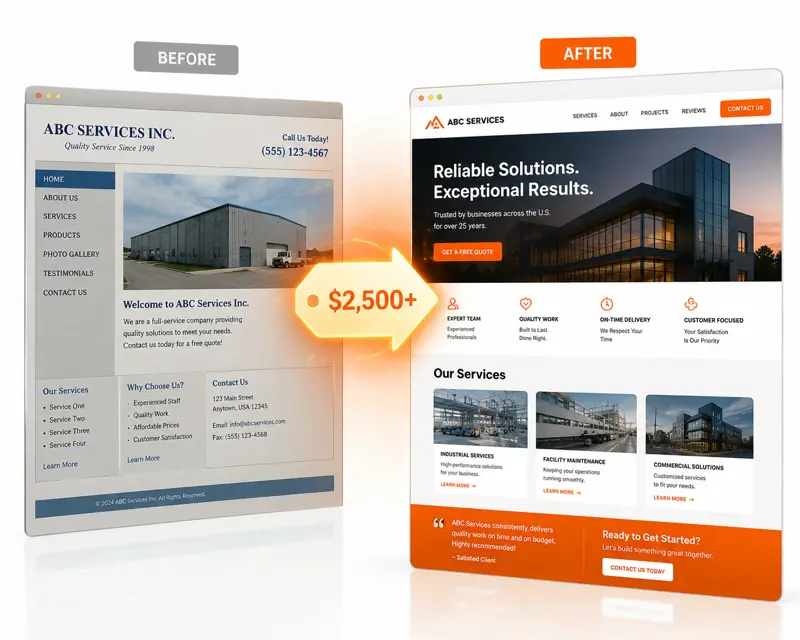
"If your website is slow, hard to update, or performs poorly on mobile devices, it is no longer helping your business. This guide helps you audit when a redesign is necessary."
Key Takeaways
- 1Review Core Web Vitals and page speed before planning any redesign work.
- 2Preserve existing SEO value by mapping and redirecting all important URLs.
- 3Modern image formats like WebP and AVIF significantly reduce load time.
- 4Accessibility improvements help users and reduce compliance risks.
- 5A redesign should focus on performance, clarity, and long term maintainability.
Legacy code is similar to rust on a machine. It builds up slowly and reduces efficiency over time. In 2026, a website is not just a digital brochure. It functions as a sales tool, trust builder, and operational asset.
Many businesses continue using outdated websites because they still exist online. The problem is that existing does not mean effective. An old website can quietly reduce leads, harm credibility, and increase operational friction.
Redesigning a website is not about following trends. It is about removing limitations that prevent growth. Knowing when to redesign is more important than how often.
Clear Signs Your Website Needs a Redesign
One of the strongest signals is mobile performance. If your website does not work smoothly on phones, users leave immediately. This alone can cut potential inquiries in half.
Another sign is dependency. If simple content changes require a developer, the system is no longer supporting the business. It slows down marketing and decision making.
- Your website is difficult to use on mobile devices.
- Loading time feels slow on normal internet connections.
- Content updates require technical help.
- Bounce rate is consistently high.
- The design feels outdated compared to competitors.
Performance Is the Foundation
Speed directly affects trust. Users associate slow websites with poor service, even if the business itself is strong. Search engines also reward fast and stable experiences.
Core Web Vitals measure how quickly content loads, how stable the layout is, and how responsive the site feels. Poor scores indicate technical debt that should not be ignored.
Is your website losing customers?
Stop losing customers to competitors. Check your website score now and get a free optimization report.
SEO Risks During Redesign
Redesigns often fail when SEO is treated as an afterthought. Removing or changing URLs without proper redirects leads to lost rankings and traffic.
Every important page should be mapped from old to new. Redirects preserve authority and help search engines understand the changes.
Why Accessibility Matters More Than Ever
Accessibility improves usability for everyone, not just users with disabilities. Clear contrast, readable text, and keyboard navigation improve overall experience.
In some regions, accessibility issues can also lead to legal risks. Building with accessibility in mind is a practical decision.
Content and Messaging Audit
Redesign is the right time to review content honestly. If messaging no longer matches what the business does today, design changes alone will not help.
Clear value propositions, updated service descriptions, and strong calls to action turn traffic into inquiries.
A Redesign Is a Reset Opportunity
A well planned redesign removes friction, improves speed, and aligns the website with current business goals. It sets a foundation for future growth.
The real cost is not redesigning. It is continuing to rely on a website that quietly pushes potential customers away.
Planning a website
Tell Us What Your Website Needs to Do
You get a fixed quote that lists every page and integration before any work starts.
Frequently Asked Questions
How often should a website be redesigned?
Is redesigning the same as rebuilding?
Will a redesign affect my Google rankings?
What is the first thing to audit before redesigning?
Should I redesign just for looks?
How long does a professional redesign take?
Do I need new content during a redesign?
Can I keep my existing domain?
What happens if I skip redirects?
Is mobile optimization still important in 2026?
Should redesign include accessibility improvements?
What is the role of Core Web Vitals?
Can I redesign without downtime?
Is redesign expensive?
Should I change hosting during a redesign?
What pages should be prioritized?
Can I redesign in phases?
Do redesigns improve conversions?
Should analytics be reviewed before redesign?
Is SEO content removed during redesign?
What is technical debt in websites?
Can old plugins affect redesign quality?
Should branding change with redesign?
Is redesign necessary if traffic is stable?
What is the biggest redesign mistake?

Bhavesh Barot
Founder & CEO
Founder & CEO of FactoryJet, an ecommerce and AI services company that has served 500+ businesses across the US, UK, UAE, and India. Writes about ecommerce builds, AI agents, and AI search.
Related reading
- Website Redesign Cost for US Small Businesses in 2026US small businesses are spending $3,500–$25,000 on website redesigns in 2026, but the price range is enormous and the correlation between cost and quality is weak. This guide breaks down exactly what drives redesign costs, when you need a full rebuild vs. a refresh, and how to get a Lighthouse 95+ redesign without overpaying.
- Website Redesign Cost UK 2026: Complete Pricing Guide for SMBs (5-200 Employees)UK website redesigns cost £1,500–£8,000 for SMBs in 2026, with scope, platform choice, and agency location driving the final price. This guide breaks down real costs, hidden fees, and ROI timelines so you can budget accurately and avoid overpaying.
- Website Redesign for Small Business UK 2026: AI-Powered Transformation in 4 WeeksUK small businesses can now complete a full website redesign in 4 weeks using AI-powered workflows, achieving Lighthouse scores above 92 while cutting costs. This guide covers the 2026 redesign process, AI tools, realistic budgets, and how to avoid the pitfalls that waste £8,000+ on projects that never launch.