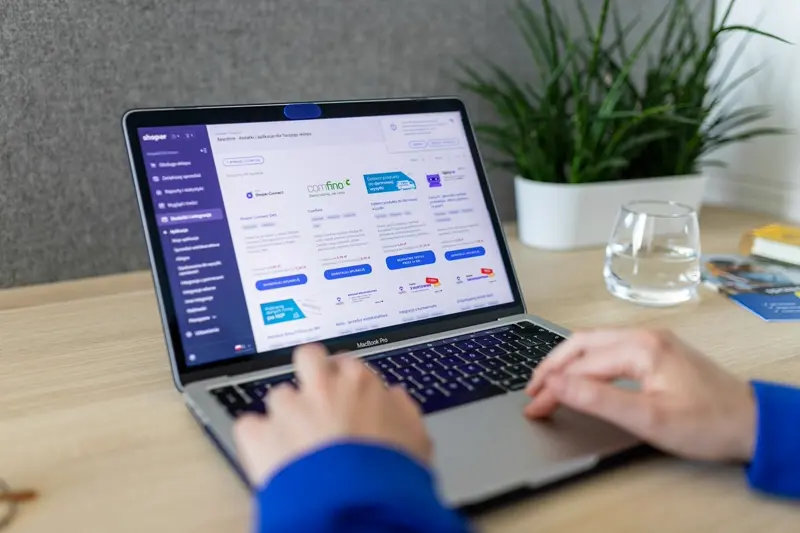
"Building an online store in 2026 means choosing between Shopify, WooCommerce, or custom platforms, then layering AI agents for support, sales, and fulfilment. This guide walks UK SMB founders through platform selection, payment setup, AI integration, and launch, with real costs and timelines."
Key Takeaways
- 1Shopify suits fast launches (2–3 weeks) with £29–£259/month plans; WooCommerce offers full control for £500–£3,000 upfront but needs hosting and maintenance.
- 2AI agents in 2026 handle 60–80% of customer queries, qualify leads, and automate order tracking, reducing support costs by 40–60% for UK SMBs.
- 3Stripe and PayPal remain dominant in the UK, but Klarna and Clearpay drive 15–25% higher basket values through Buy Now Pay Later at checkout.
- 4GDPR, PCI-DSS, and UK Online Safety Act compliance are non-negotiable. UK GDPR penalties are ceilings, not floors: the standard maximum is £8.7 million or 2% of worldwide annual turnover, and the higher maximum for the most serious infringements is £17.5 million or 4%.
- 5A minimum viable store (10–20 products, basic AI chatbot, Stripe checkout) costs £1,500–£3,000 and launches in 2–4 weeks with an experienced agency.
- 6Post-launch, budget £100–£300/month for hosting, security patches, plugin updates, and uptime monitoring to avoid downtime and cart abandonment.
- 7AI voice agents and WhatsApp commerce integrations are now table stakes for UK retailers targeting mobile-first buyers under 35.
Table of Content: In This Article
- Why UK SMBs Are Rebuilding Their Online Stores in 2026
- Step 1: Choose Your E-Commerce Platform (Shopify vs WooCommerce vs Custom)
- Step 2: Set Up Payments, Shipping, and Tax (UK-Specific Requirements)
- Step 3: Integrate AI Agents for Support, Sales, and Fulfilment
- Step 4: Design for Mobile-First Buyers and Lighthouse 90+ Performance
- Step 5: Launch, Test, and Optimise (The First 30 Days)
- What It Costs to Build and Run an Online Store in 2026
- How FactoryJet Builds E-Commerce Stores for UK SMBs
Choose a platform that fits your budget and control needs: Shopify for rapid deployment, WooCommerce for flexibility, or custom Next.js for performance. Integrate Stripe and PayPal, add mobile-first design, embed an AI chatbot for round-the-clock support, and ensure GDPR compliance. UK SMBs typically invest £1,500–£8,000 upfront and £200–£500 monthly for hosting and maintenance, with delivery in two to four weeks when working with an experienced team.
Why UK SMBs Are Rebuilding Their Online Stores in 2026
UK small businesses are rebuilding their online stores in 2026 because customer expectations have outpaced what legacy platforms can deliver. Mobile-first buyers now expect sub-2-second page loads and one-tap checkout flows, standards that stores built before 2022 simply cannot meet without complete overhauls. Speed isn't a luxury; it's table stakes for conversion. AI agents have shifted from experimental to essential. Today's platforms handle 60–80% of support queries autonomously, qualify leads in real time, and automate order tracking without human intervention. That cuts operational costs while lifting conversion rates, freeing founders to focus on product and growth rather than inbox firefighting. Regulatory pressure has intensified. GDPR, PCI-DSS, and the UK Online Safety Act now require active, ongoing compliance, not checkbox exercises. Outdated platforms expose businesses to ICO enforcement, and the ceilings are high: a standard maximum of £8.7 million or 2% of worldwide annual turnover, and a higher maximum of £17.5 million or 4% for the most serious infringements. Enforcement is not theoretical either. In October 2025 the Information Commissioner's Office fined Capita £14 million over a breach affecting more than 6 million people. Modern platforms have caught up to demand. Shopify, WooCommerce, and headless commerce solutions in 2026 ship with native AI integrations, Buy Now Pay Later options from Klarna and Clearpay, and sub-1-second checkout flows built in. These aren't bolt-on features. They're core infrastructure. Businesses that rebuild now gain a 24–36 month competitive window before the next wave of buyer expectations arrives. Waiting means falling further behind competitors who've already made the switch.
Step 1: Choose Your E-Commerce Platform (Shopify vs WooCommerce vs Custom)
For most UK SMBs launching their first online store in 2026, Shopify delivers the fastest, safest route to revenue, hosted infrastructure, built-in PCI compliance, and a 2–3 week launch timeline at £29–£259 per month depending on feature requirements. You own zero server responsibility, which matters when GDPR audits and Payment Card Industry standards carry real penalties. WooCommerce on WordPress flips that equation: you control every pixel, every database field, and every cost line, but you also manage hosting (£50–£150/month through providers like Kinsta or WP Engine), security patches, and plugin compatibility. For founders who need bespoke checkout flows or want to avoid Shopify's 1.5–2% transaction fees on external payment gateways, that trade-off makes commercial sense. Custom builds using Next.js 15 or headless architectures deliver Lighthouse performance scores above 95 and buyer experiences no template can match, product configurators, real-time inventory syncs with Xero, or trade-account workflows like the one FactoryJet built for GPSUK in Staines. Gareth Sampson's team needed Request for Quote automation, artwork upload with print-preview visualisation, and Net 30/60/90 payment terms for distribution partners; the custom platform's AI-native commerce layer handled that complexity without custom code. But expect £5,000–£15,000 in build costs and 4–8 weeks to production. The practical answer for UK businesses selling 10–500 SKUs with standard checkout, shipping, and tax logic: Shopify or WooCommerce covers 90% of requirements at half the cost of custom development. Reserve headless or bespoke platforms for scenarios where your competitive advantage lives in the transaction experience itself, subscription boxes with dynamic pricing, B2B portals with approval chains, or marketplaces connecting multiple vendors. Choose the platform that removes friction from your first sale, not the one with the longest feature list.
➡ Learn more: Ecommerce Development
| Platform | Launch Time | Upfront Cost | Monthly Cost | Best For |
|---|---|---|---|---|
| Shopify | 2–3 weeks | £1,000–£3,000 | £29–£259 | Fast launch, hosted, PCI-compliant |
| WooCommerce | 2–4 weeks | £500–£3,000 | £50–£150 (hosting) | Full control, WordPress ecosystem |
| Custom (Next.js) | 4–8 weeks | £5,000–£15,000 | £100–£300 (hosting) | Unique design, Lighthouse 95+, differentiation |
| FactoryJet Build | 2–4 weeks | Fixed quote after scoping | Fixed quote after scoping | Shopify, WooCommerce, or custom, AI agents included |
Step 2: Set Up Payments, Shipping, and Tax (UK-Specific Requirements)
A UK online store in 2026 must accept Stripe and PayPal at minimum, together they account for 90% of buyer preference, with Stripe charging 1.5% plus 20p per transaction and PayPal 2.9% plus 30p. Offering only one payment method costs you sales; offering both is table stakes. Add Klarna or Clearpay to capture the under-35 demographic and lift average order value by 15–25%, since Buy Now Pay Later removes the psychological friction of a single large payment at checkout. Shipping integration separates amateur stores from professional ones. Connect Royal Mail, DPD, or Evri APIs to display real-time quotes based on weight and postcode, and set a free delivery threshold at £50 to match Amazon and high-street retailer expectations. Customers abandon carts when shipping feels arbitrary or expensive; transparent, calculated rates at checkout eliminate that friction and improve conversion by double digits. VAT compliance is non-negotiable. The standard 20% rate must auto-calculate on every taxable item, and your platform needs to generate HMRC-compliant invoices with VAT breakdowns. Shopify Tax and WooCommerce VAT plugins handle this automatically, including reduced rates for children's clothing or zero-rated books. Manual VAT calculation invites errors that trigger audits; automation ensures you collect the correct amount and file accurate returns every quarter. PCI-DSS compliance protects cardholder data and shields you from liability. If you use Shopify or Stripe, compliance is built in, they never expose raw card numbers to your server. WooCommerce stores require an SSL certificate and a host that meets PCI standards, which most managed WordPress providers include by default. Storing card data yourself is unnecessary and risky; tokenised payments through a certified gateway keep you compliant without adding technical overhead. Get payments, shipping, and tax right in the first build, and you avoid costly retrofits when HMRC or your payment processor audits your setup six months later.
Step 3: Integrate AI Agents for Support, Sales, and Fulfilment
AI agents improve e-commerce operations in 2026 by automating customer conversations, qualifying sales leads, and handling routine fulfilment tasks around the clock, freeing your team to focus on high-value work. A well-configured AI chatbot answers FAQs, tracks orders, and recommends products 24/7, typically resolving 60–80% of customer queries without human intervention. That means fewer support tickets, faster response times, and happier buyers who get instant answers at midnight or Sunday morning. AI sales agents take qualification further by asking budget, use case, and timeline questions in natural conversation, then routing warm prospects directly to your team via CRM or WhatsApp. Instead of cold leads clogging your inbox, you receive pre-qualified enquiries ready to close. AI voice agents extend this capability to phone channels, taking orders, rescheduling deliveries, and processing returns, cutting call centre costs by 40–60% for UK SMBs who previously relied on outsourced support. WhatsApp commerce integrations represent the fastest-growing channel in 2026. Buyers browse your catalogue, place orders, and complete payment inside WhatsApp without visiting your website. Conversion rates run 20–30% higher than traditional web checkout because the entire journey happens in a familiar, low-friction environment. For businesses serving audiences in Birmingham, Leicester, or Bradford, where WhatsApp adoption is particularly strong, this channel often becomes the primary revenue driver within three months. Building a basic AI chatbot costs £500–£1,500 upfront and £50–£150 per month to run, depending on message volume and integration complexity. FactoryJet includes AI agents in every e-commerce build, connecting them to Shopify, WooCommerce, or custom Next.js storefronts. The result is a store that sells, supports, and fulfils orders intelligently, without hiring a support team or paying for enterprise software.
➡ Learn more: AI Chatbot Development
E-Commerce Development: Practical Guidance for Your Business
We'll review your specific situation and recommend the right approach. No obligation.
Step 4: Design for Mobile-First Buyers and Lighthouse 90+ Performance
A UK online store in 2026 must load in under two seconds on mobile, score Lighthouse Performance 90 or higher, and meet WCAG 2.1 AA accessibility standards under the Equality Act 2010. Seventy-two percent of UK e-commerce traffic now comes from smartphones, and Google's Core Web Vitals treat speed as a ranking signal, stores that lag past three seconds lose both visibility and sales. Start with WebP images compressed to under 200KB each, lazy loading for below-the-fold content, and a CDN like Cloudflare or Fastly to serve assets from edge nodes closest to your buyer. Keep total page weight under 1MB and Time to Interactive under three seconds; anything slower triggers bounce rates above 50 percent. One-tap checkout via Apple Pay or Google Pay is no longer optional, customers expect frictionless payment, and adding these options lifts mobile conversion by 20 to 30 percent. Sticky add-to-cart buttons that follow the user down the page, a persistent mini-cart icon in the header, and exit-intent popups offering 10 percent off or free UK shipping recover 15 to 25 percent of visitors who would otherwise abandon. These aren't gimmicks. They're conversion fundamentals that every Shopify and WooCommerce store should deploy by default. Accessibility compliance is both a legal obligation and a revenue unlock. Alt text on every product image, keyboard navigation for all interactive elements, and ARIA labels for screen readers ensure your store serves the 14 million disabled people in the UK. FactoryJet builds every site to Lighthouse 92+ and WCAG 2.1 AA from day one, so you launch compliant and fast without retrofitting later.
Step 5: Launch, Test, and Optimise (The First 30 Days)
The first 30 days after launch determine whether your online store gains traction or stalls. Before announcing your store to the world, run test transactions on Stripe Test Mode, PayPal Sandbox, and Klarna Playground to confirm checkout flows, email receipts, and order confirmations work flawlessly. A single broken payment step loses 67% of buyers at checkout, and UK consumers rarely give a second chance. Set up Google Analytics 4, Meta Pixel, and TikTok Pixel immediately to track traffic sources, conversion rates, and cart abandonment. Data drives optimisation, without it, you're guessing which products resonate and which marketing channels waste budget. Launch with 10–20 hero products rather than a sprawling catalogue; high-quality images at 1200×1200 pixels minimum and 150–300 word descriptions optimised for Google Shopping and voice search give each product room to breathe and rank. Monitor uptime with Pingdom or UptimeRobot from day one. The industry standard is 99.9% uptime, and one hour of downtime costs UK SMBs £500–£5,000 in lost sales, depending on traffic volume. Downtime also damages trust, buyers who encounter a broken site rarely return. Collect first-party reviews via Trustpilot, Google Reviews, or Feefo within the first two weeks. Eighty-five percent of UK buyers read reviews before purchasing, and stores with 4+ star ratings lift conversions by 20–40%. Send automated review requests three days after delivery, when satisfaction peaks and memory is fresh. The first month is about proving the fundamentals work, payments process, analytics capture behaviour, products load fast, and early customers feel confident enough to leave public feedback. Fix friction points immediately; momentum compounds when the foundation is solid.
What It Costs to Build and Run an Online Store in 2026
Building an online store in the UK in 2026 requires a clear-eyed view of both upfront investment and recurring costs, with total first-year spend typically landing between £8,000 and £15,000 for a fifty-product Shopify store that includes professional build, AI chatbot, payment processing, and six months of marketing. Upfront, expect £1,000–£3,000 for a Shopify theme and setup, £500–£3,000 for a WooCommerce build on WordPress, or £5,000–£15,000 for a custom Next.js storefront if you need headless architecture and advanced performance. Add £500–£1,500 for an AI chatbot that handles FAQs and product recommendations, plus £300–£800 to configure Stripe or PayPal and integrate with your chosen platform. Monthly operating costs start with your platform subscription: Shopify plans run £29–£259, while WooCommerce hosting sits at £50–£150 depending on traffic and whether you choose managed WordPress. SSL certificates are often free through Let's Encrypt or bundled with hosting, though premium wildcard certificates can cost up to £100 annually. Budget £100–£300 per month for maintenance, security patches, plugin updates, and uptime monitoring, and another £50–£150 if you're running a subscription AI agent for customer service or inventory forecasting. Transaction fees quietly erode margin if you don't plan for them. Stripe charges 1.5 percent plus twenty pence per transaction, PayPal takes 2.9 percent plus thirty pence, and Klarna's buy-now-pay-later service costs 3.5–5.5 percent of each sale. A sensible rule of thumb is to reserve two to three percent of gross revenue for payment processing. Marketing spend varies wildly by ambition, but a baseline budget includes £300–£1,500 monthly for Google Ads, £200–£1,000 for Meta campaigns, and £30–£150 for email marketing through Klaviyo or Mailchimp. These figures assume you're testing channels and scaling what works, not chasing vanity impressions.
How FactoryJet Builds E-Commerce Stores for UK SMBs
FactoryJet's e-commerce development process starts with a platform choice conversation: Shopify for speed and hosted simplicity, WooCommerce for WordPress familiarity and plugin flexibility, or custom Next.js for complete control over checkout flows and data architecture. Most UK SMBs land on Shopify or WooCommerce because they balance cost, launch speed, and long-term scalability without requiring an in-house developer. Every store we deliver includes AI chatbot integration for after-hours customer queries, Stripe and PayPal payment gateway setup, GDPR compliance modules, cookie consent banners, privacy policy templates, and data deletion workflows that satisfy ICO requirements, and mobile-first responsive design tested across iOS Safari, Chrome, and Samsung Internet. We guarantee Lighthouse Performance scores of 92 or higher on every build by compressing images to WebP format, lazy-loading below-the-fold content, and routing static assets through Cloudflare CDN to meet Core Web Vitals thresholds Google uses for search ranking. Standard builds deliver in two to four weeks. That timeline covers domain registration or transfer, SSL certificate provisioning through Let's Encrypt or your hosting provider, business email configuration via Google Workspace or Microsoft 365, and Google Analytics 4 property setup with enhanced e-commerce tracking enabled. You receive staging site access at the halfway mark for content review and feedback rounds before we push live. FactoryJet quotes a fixed price in writing after a short scoping call, set by platform complexity and feature count, and ongoing maintenance covers plugin updates, security patches, uptime monitoring, and quarterly performance audits. GPSUK in Staines, Surrey, operates a B2B promotional products store on a custom B2B e-commerce platform that FactoryJet built, featuring request-for-quote workflows, trade account registration, artwork file upload with print-preview visualisation, and Net 30/60/90 payment terms for distribution partners ordering branded merchandise in bulk.
➡ Learn more: Ecommerce Development
➡ Ready to launch your online store? FactoryJet e-commerce development for US businesses, custom builds, Lighthouse 95+, with a fixed quote in writing after a short scoping call. Or see our Shopify store packages.
Ready to transform your business?
We'll review your specific situation and recommend the right approach. No obligation.
Book a Free 30-Min Consultation →500+ businesses · 98% satisfaction · 12+ years combined experience
Planning a store
Tell Us What You Sell, and Where
We reply with what we would build and how long it takes. You see a working draft of your store before you sign.
Frequently Asked Questions
How much does it cost to build an online store in the UK in 2026?
Should I use Shopify or WooCommerce for my UK small business?
Do I need an AI chatbot on my online store in 2026?
What payment methods must a UK online store accept in 2026?
How long does it take to launch an online store in 2026?
What are the ongoing costs of running an online store in the UK?
Is my online store GDPR-compliant by default?
Can I sell B2B and B2C from the same online store?
Do I need a mobile app for my online store in 2026?
What's the difference between Shopify and a custom Next.js store?
How do AI sales agents work on e-commerce sites?
Can I integrate my online store with Xero or QuickBooks?

Bhavesh Barot
Founder & CEO
Founder & CEO of FactoryJet, an ecommerce and AI services company that has served 500+ businesses across the US, UK, UAE, and India. Writes about ecommerce builds, AI agents, and AI search.
Related reading
- Custom Online Store Development for UK SMBs: Enterprise Features Without Enterprise Costs (2026 Guide)UK SMBs can now access enterprise-grade e-commerce features (multi-currency, B2B workflows, AI personalisation) at prices that used to be out of reach, through AI-native development platforms. This guide shows how custom online stores deliver advanced capabilities without the £50k+ price tags.
- How to Build an AI Agent: A Step-by-Step Guide for UK Businesses (and When to Hire Help)How to build an AI agent in 10 practical steps: pick the job, map the rules, choose a model, choose no-code (n8n, Zapier, Make, Copilot Studio) or code (OpenAI Agents SDK, LangGraph, Claude Agent SDK), connect tools and data, add guardrails, test, monitor and stay on the right side of UK GDPR.
- Shopify Store Development for UK SMBs: From Setup to Scale in 2026 (Complete Agency Guide)UK SMBs can launch a professional Shopify store in 2-4 weeks for £2,000-£8,000, with ongoing costs of £100-£300/month. This guide covers setup, payment integration, UK compliance, and scaling strategies that work for businesses from Manchester to Brighton.